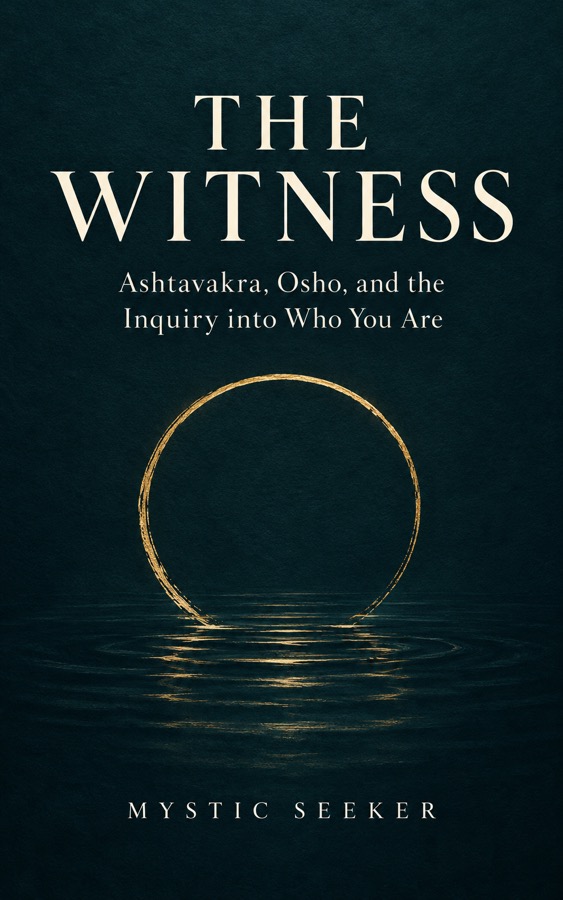
Book study guide
THE WITNESS Study Guide
Ashtavakra, Osho, and the Inquiry into Who You Are
THE WITNESS study guide: Across 24 chapters, this book examines the self through thought, the body, ambition, meditation, responsibility, love, and grief. It asks whether the witness can itself become an identity we...
Orientation
What this book is really about
Across 24 chapters, this book examines the self through thought, the body, ambition, meditation, responsibility, love, and grief. It asks whether the witness can itself become an identity we defend. Research helps clarify the inquiry without claiming to settle its metaphysical questions.
Readers exploring Ashtavakra, Osho, self-inquiry.
Readers looking for a clear, contextual introduction.
Idea map
The main movements of the book
Movement 1
Examine the difference between awareness and the stories you tell about yourself.
An independent inquiry into witnessing, identity, and ordinary life through the Ashtavakra Gita and Osho’s interpretations.
Movement 2
Bring self-inquiry into work, relationships, responsibility, and grief.
Across 24 chapters, this book examines the self through thought, the body, ambition, meditation, responsibility, love, and grief. It asks whether the witness can itself become an identity we defend. Research helps clarify the inquiry without claiming to settle its metaphysical questions.
Reading plan
A focused way to read it
Before reading
Read the synopsis and choose one question you actually care about. For THE WITNESS, a good starting question is: What changes when attention becomes disciplined enough to see the machinery of the self?
First pass
Move through the book for orientation. Mark the ideas that feel useful, uncomfortable, or unusually clear. Do not try to settle every question immediately.
Second pass
Return to the sections connected with Ashtavakra, Osho, self-inquiry. Translate each idea into one observation about your life, practice, or understanding.
After finishing
Continue into the Awakening & Presence reading path or one of the related Study Hubs so the book becomes part of a larger inquiry.
Key concepts
Terms and ideas to keep nearby
Ashtavakra
Ashtavakra points to something you can verify in attention, reaction, habit, and the ordinary mechanics of the self.
Osho
The value of Osho is practical: it shows up in how quickly you notice yourself before a pattern takes over.
self-inquiry
self-inquiry becomes meaningful when it changes how you observe, pause, speak, or choose under pressure.
witnessing
witnessing points to something you can verify in attention, reaction, habit, and the ordinary mechanics of the self.
nonduality
The value of nonduality is practical: it shows up in how quickly you notice yourself before a pattern takes over.
identity
identity becomes meaningful when it changes how you observe, pause, speak, or choose under pressure.
Practice
Turn the reading into reflection
Examine the difference between awareness and the stories you tell about yourself
Try it once in a real situation today. Keep the test small: one conversation, one decision, or one moment of discomfort.
Bring self-inquiry into work, relationships, responsibility, and grief
Use this as a daily checkpoint. Notice where the idea clarifies your response, then name the specific moment it changed how you acted.
Question whether spiritual identity can become another attachment
Turn the idea into one observable behavior. If it does not change what you notice or choose, make it more concrete.
Where does "Ashtavakra" show up in your daily choices, relationships, or inner speech?
What would become simpler if you took "Osho" seriously for one week?
Which habit, fear, or assumption does "self-inquiry" ask you to examine rather than defend?
How would your next decision change if "witnessing" became the lens for reading this book?
Where does "nonduality" show up in your daily choices, relationships, or inner speech?
What would become simpler if you took "identity" seriously for one week?
Which habit, fear, or assumption does "Examine the difference between awareness and the stories you tell about yourself." ask you to examine rather than defend?
How would your next decision change if "Bring self-inquiry into work, relationships, responsibility, and grief." became the lens for reading this book?
Reader questions
Questions this guide helps answer
What is the best way to read THE WITNESS?
Read THE WITNESS slowly enough to connect each idea with one real situation. The most useful approach is to move between the book's explanation, your own reflection, and one practical change in attention or behavior.
What questions does THE WITNESS help with?
THE WITNESS is especially useful for questions around Ashtavakra, Osho, self-inquiry, witnessing, nonduality. It is written to make the material readable without stripping away its depth.
Is THE WITNESS beginner friendly?
Yes. THE WITNESS is designed to give readers a clear entrance into the subject while still leaving room for deeper study.
What should I read after THE WITNESS?
Use the related books, Study Hubs, and reading paths on this page to continue into connected themes without losing the thread of the book.
Continue reading
Related books
Continue through connected ideas without losing the thread opened by this guide.
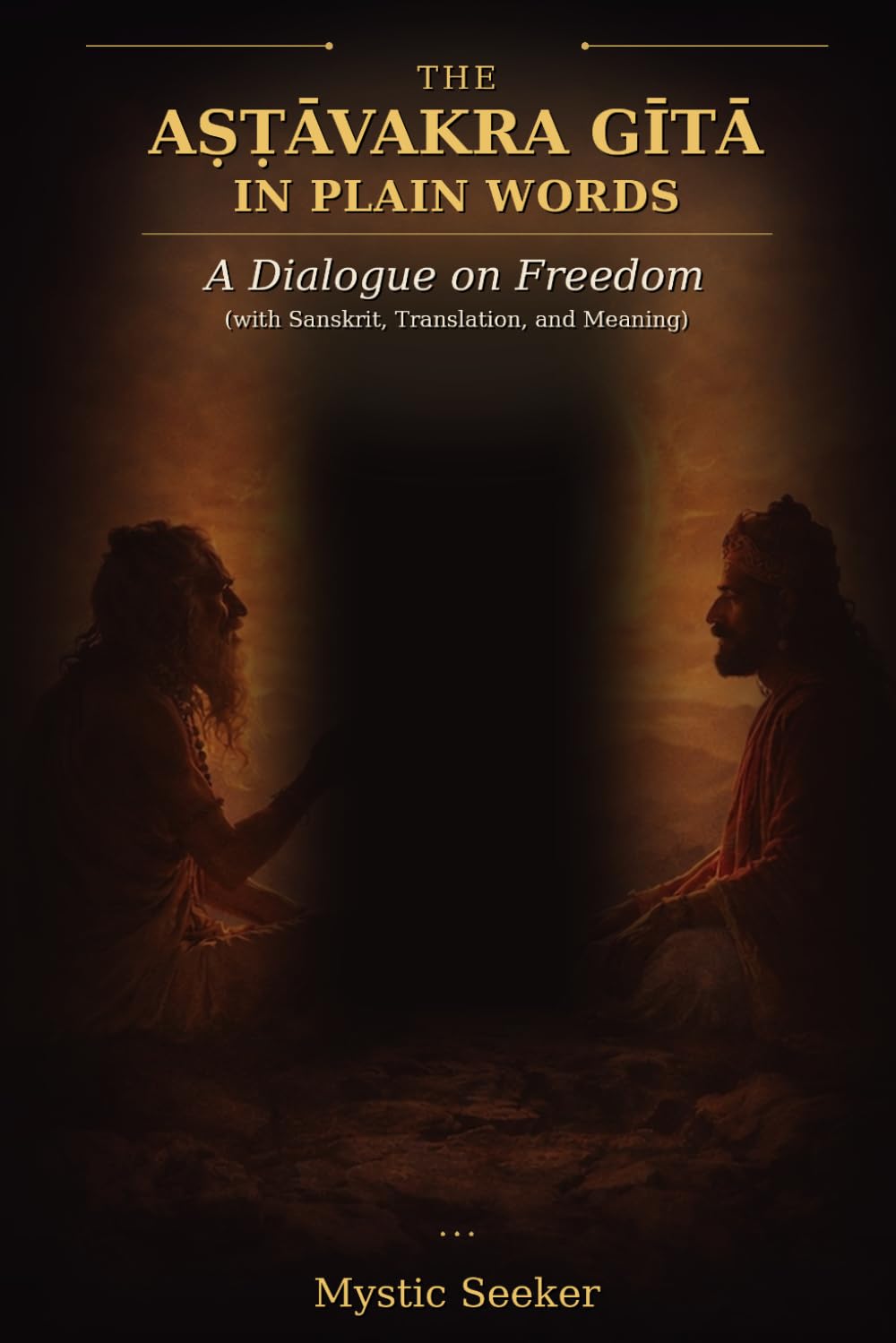
The Ashtavakra Gita in Plain Words
A Dialogue on Freedom
This is a reading companion for one of the boldest nondual texts in the tradition: a book that does not flatter the self but asks what remains when mistaken identity falls away.
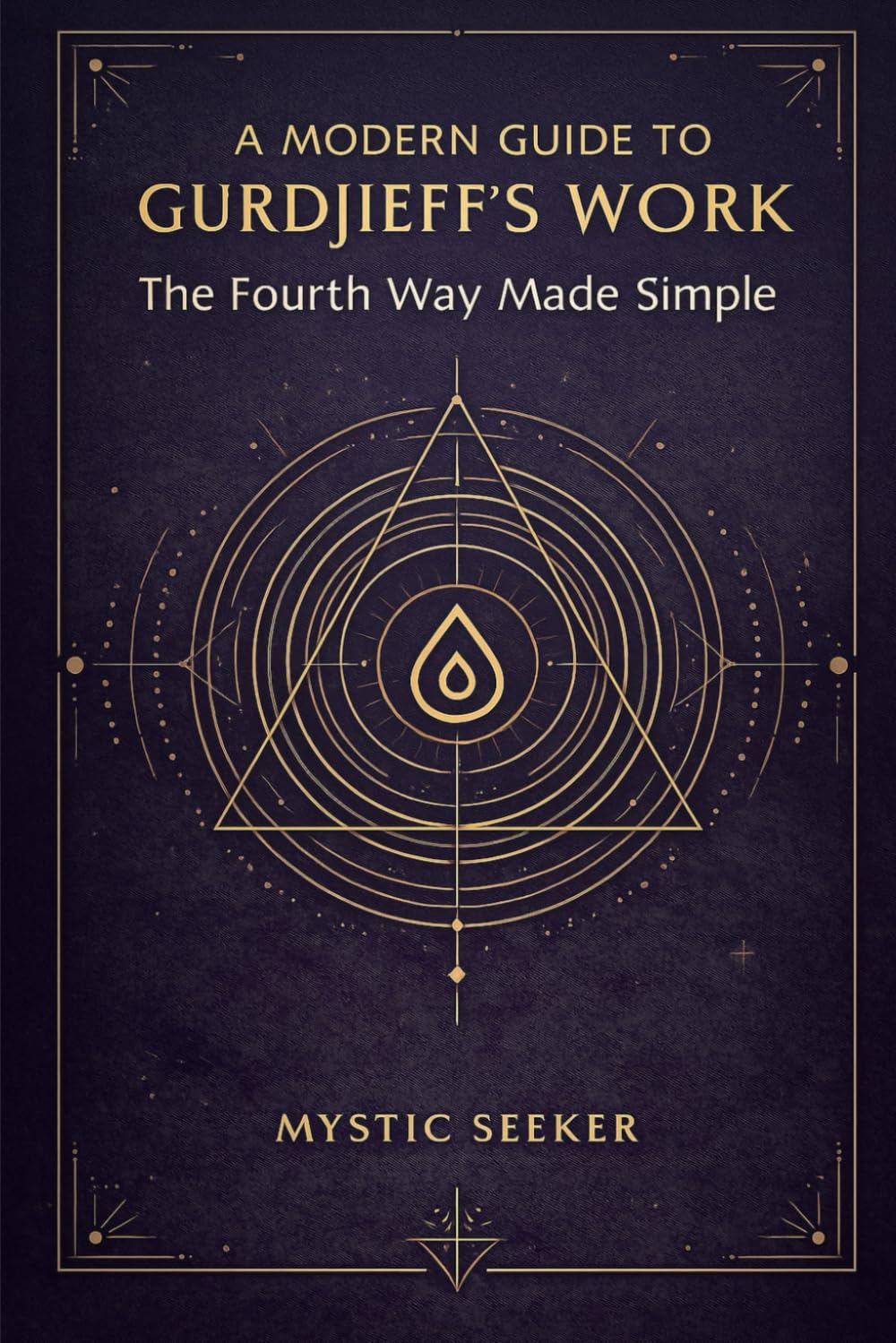
A Modern Guide to Gurdjieff's Work
The Fourth Way Made Simple
This book strips away the fog that often surrounds Gurdjieff and makes the Work readable, grounded, and genuinely usable in ordinary life.
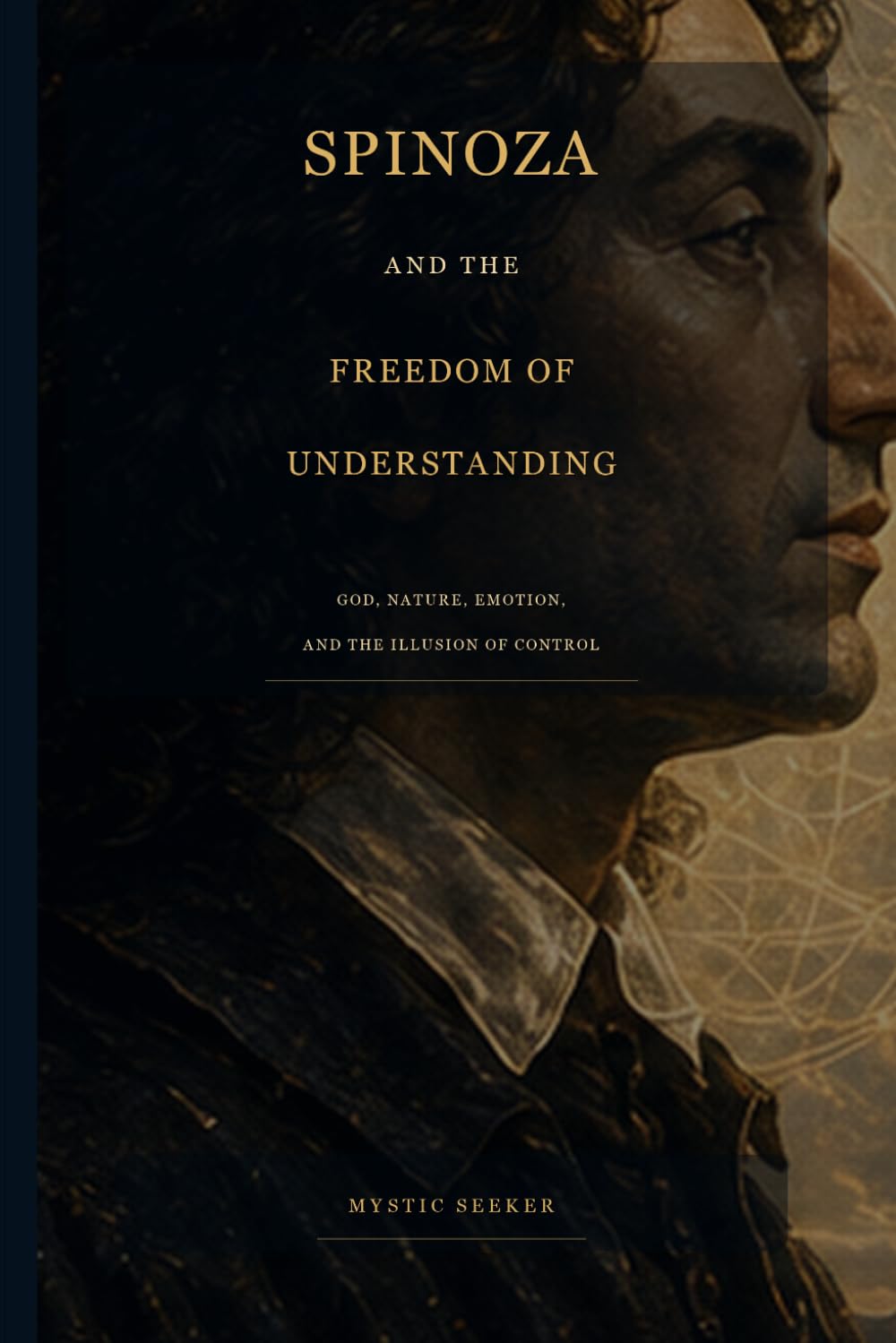
Spinoza and the Freedom of Understanding
A Clear, Illustrated Guide to God, Nature, Emotion, and Inner Freedom
This book brings Spinoza out of academic distance and into the living questions of control, desire, fear, free will, peace, and the search for a deeper kind of freedom.
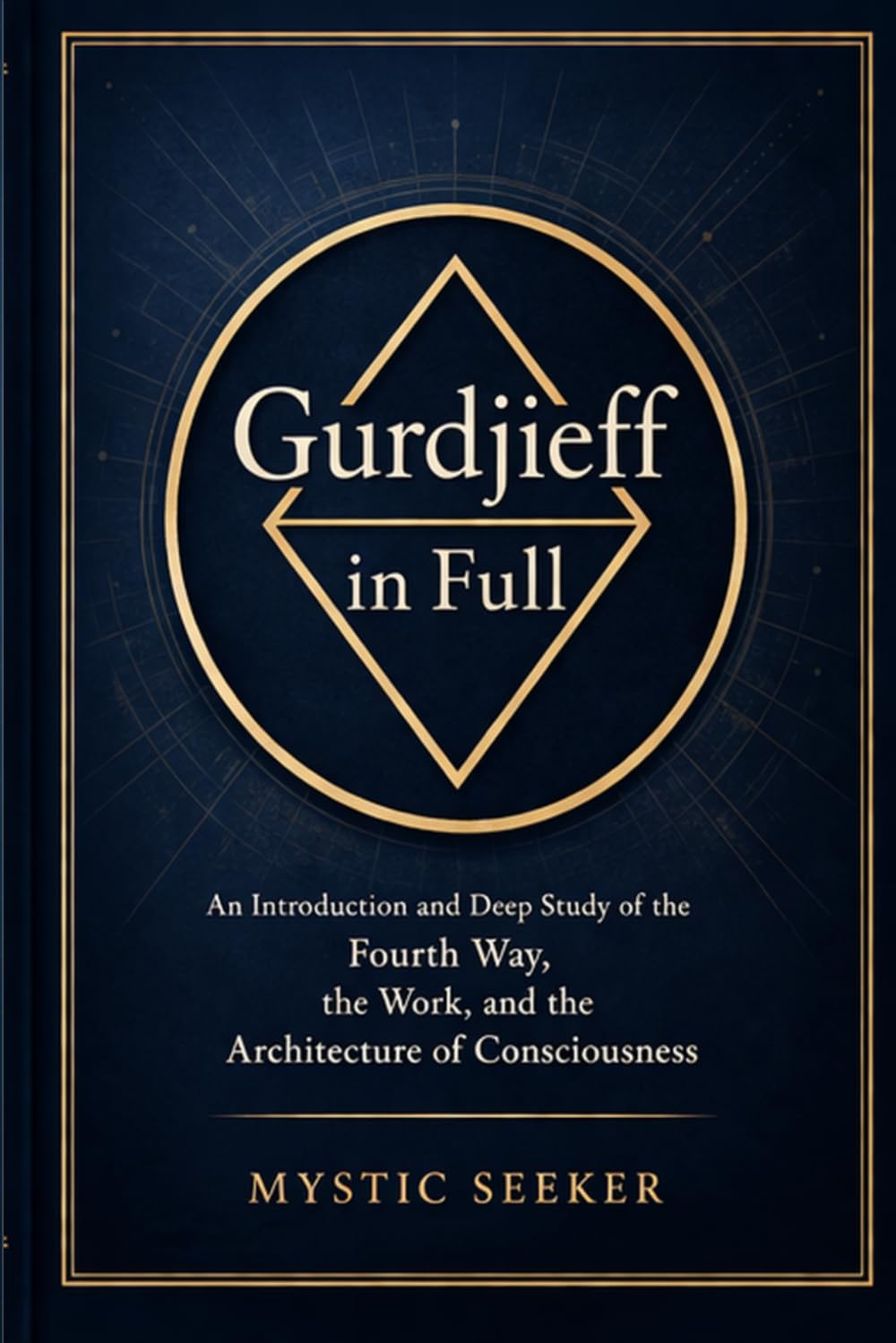
Gurdjieff in Full
An Introduction and Deep Study of the Fourth Way, the Work, and the Architecture of Consciousness
Built for readers who want clarity and seriousness at the same time, this book holds together practice, criticism, cosmology, discipline, and long-term study.