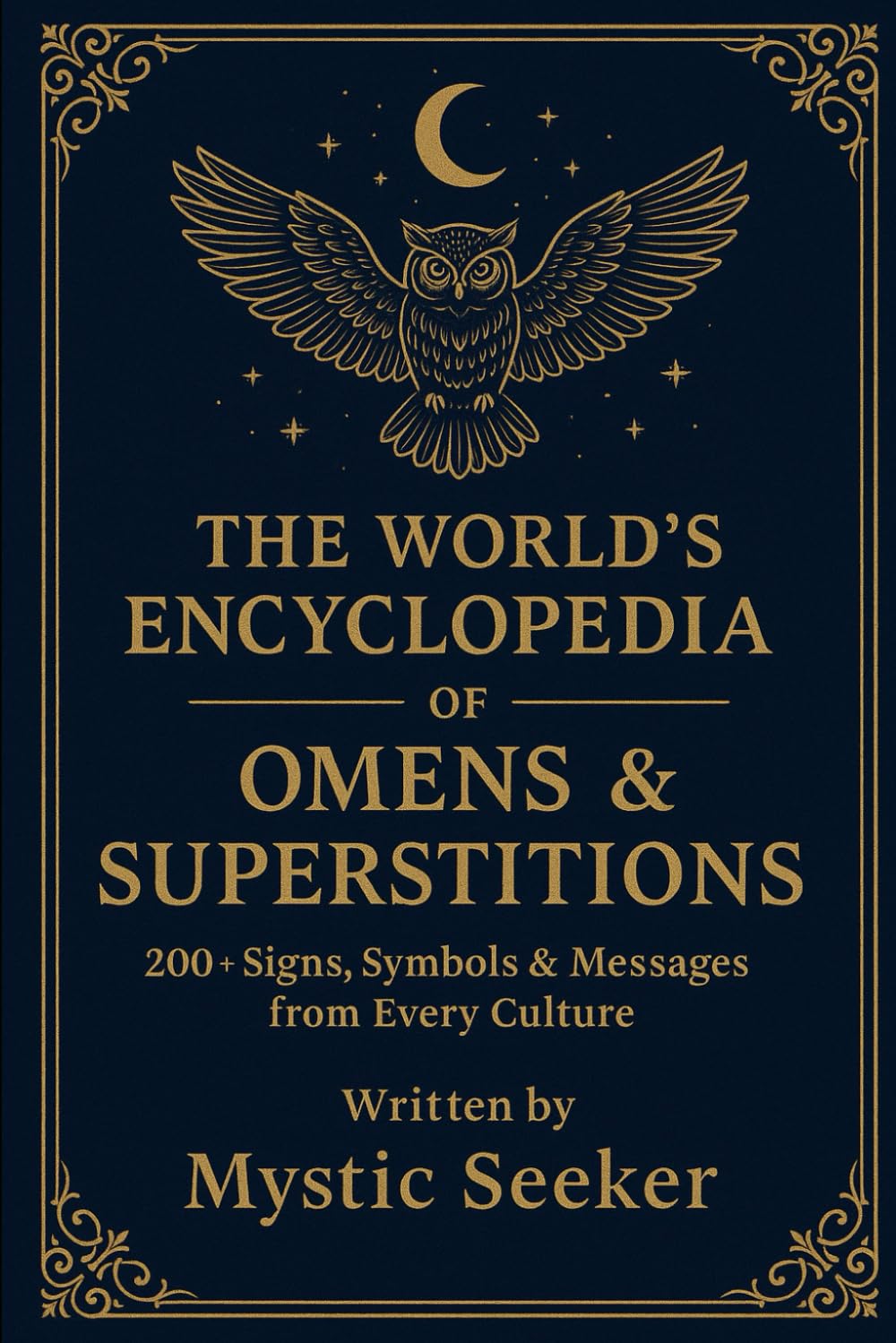
Book study guide
The World's Omens & Superstitions Study Guide
Signs, Symbols, and Beliefs That Shaped Human Destiny
The World's Omens & Superstitions study guide: This book treats superstition seriously as part of the symbolic life of humanity: a way people tried to read danger, destiny, protection, and the unknown. Explore key...
Orientation
What this book is really about
This book treats superstition seriously as part of the symbolic life of humanity: a way people tried to read danger, destiny, protection, and the unknown.
Readers fascinated by folklore, taboo, and symbolic belief.
Anyone curious about how cultures respond to uncertainty.
Seekers interested in the emotional logic of superstition.
Idea map
The main movements of the book
Movement 1
How omens and taboos function inside cultural and spiritual life.
Across history, people have looked to dreams, animals, household rituals, forbidden acts, celestial signs, and protective charms for orientation. This book gathers those beliefs across cultures and asks what they reveal.
Movement 2
Why symbolic belief often grows strongest around uncertainty and fear.
Rather than mocking superstition from a distance, it shows how these beliefs often emerge from a deeply human need for safety, order, reassurance, and symbolic meaning under uncertainty.
Reading plan
A focused way to read it
Before reading
Read the synopsis and choose one question you actually care about. For The World's Omens & Superstitions, a good starting question is: How can symbolic language become clear enough to reveal pattern, protection, healing, and transformation?
First pass
Move through the book for orientation. Mark the ideas that feel useful, uncomfortable, or unusually clear. Do not try to settle every question immediately.
Second pass
Return to the sections connected with omens, belief, cultural memory. Translate each idea into one observation about your life, practice, or understanding.
After finishing
Continue into the Symbols & Meaning reading path or one of the related Study Hubs so the book becomes part of a larger inquiry.
Key concepts
Terms and ideas to keep nearby
omens
omens helps turn the symbol from an image into a way of seeing pattern, protection, healing, or transformation.
belief
The book treats belief as visual language: something to read carefully, not merely something to admire.
cultural memory
cultural memory gives the reader a bridge between ancient imagery and the questions that still shape ordinary life.
symbolic thinking
symbolic thinking helps turn the symbol from an image into a way of seeing pattern, protection, healing, or transformation.
folk traditions
The book treats folk traditions as visual language: something to read carefully, not merely something to admire.
superstitions
superstitions gives the reader a bridge between ancient imagery and the questions that still shape ordinary life.
folklore
folklore helps turn the symbol from an image into a way of seeing pattern, protection, healing, or transformation.
signs
The book treats signs as visual language: something to read carefully, not merely something to admire.
Practice
Turn the reading into reflection
How omens and taboos function inside cultural and spiritual life
Look for this pattern in art, ritual, dreams, architecture, or ordinary behavior. Write down what the symbol seems to organize or protect.
Why symbolic belief often grows strongest around uncertainty and fear
Use the symbol as a lens for attention. Notice what it reveals, what it conceals, and why people might have preserved it across cultures.
How folklore, archetype, and ritual shape everyday human behavior
Let the image slow you down. Ask what the symbol is doing before trying to reduce it to one fixed meaning.
Where does "omens" show up in your daily choices, relationships, or inner speech?
What would become simpler if you took "belief" seriously for one week?
Which habit, fear, or assumption does "cultural memory" ask you to examine rather than defend?
How would your next decision change if "symbolic thinking" became the lens for reading this book?
Where does "folk traditions" show up in your daily choices, relationships, or inner speech?
What would become simpler if you took "superstitions" seriously for one week?
Which habit, fear, or assumption does "folklore" ask you to examine rather than defend?
How would your next decision change if "signs" became the lens for reading this book?
Reader questions
Questions this guide helps answer
What is the best way to read The World's Omens & Superstitions?
Read The World's Omens & Superstitions slowly enough to connect each idea with one real situation. The most useful approach is to move between the book's explanation, your own reflection, and one practical change in attention or behavior.
What questions does The World's Omens & Superstitions help with?
The World's Omens & Superstitions is especially useful for questions around omens, belief, cultural memory, symbolic thinking, folk traditions. It is written to make the material readable without stripping away its depth.
Is The World's Omens & Superstitions beginner friendly?
The World's Omens & Superstitions can be read by serious beginners, but it works best when the reader is willing to slow down and reflect rather than skim for quick conclusions.
What should I read after The World's Omens & Superstitions?
Use the related books, Study Hubs, and reading paths on this page to continue into connected themes without losing the thread of the book.
Continue reading
Related books
Continue through connected ideas without losing the thread opened by this guide.

Sacred Symbols of the World
Decoding 100 Ancient Signs of Power, Myth & Meaning
This is the broad gateway volume for readers who want to understand how symbols carry memory, myth, spiritual intuition, and cross-cultural meaning.

Sacred Symbols of Protection
Ancient Signs, Talismans, and Spiritual Emblems for Strength, Safety, and Blessing
This is the strongest emotional entry point into the Sacred Symbols series: a focused book on how protection has been imagined through sacred form across civilizations.

Symbols of Transformation
Ancient Signs of Rebirth, Renewal, and Inner Change
This volume enters the symbolic life of change through the Phoenix, Lotus, Scarab, Ouroboros, Mandala, Kintsugi, Tree of Life, and other emblems of inner and spiritual transformation.

The Book of Sacred Geometry
The Hidden Meaning of the World's Most Powerful Geometric Symbols
This is the premium visual volume in the series: a book about the forms that feel universal, charged, and mysteriously alive across architecture, ritual, nature, and meditation.