
Book study guide
Sacred Symbols of the World Study Guide
Decoding 100 Ancient Signs of Power, Myth & Meaning
Sacred Symbols of the World study guide: This is the broad gateway volume for readers who want to understand how symbols carry memory, myth, spiritual intuition, and cross-cultural meaning. Explore key ideas, reader...
Orientation
What this book is really about
This is the broad gateway volume for readers who want to understand how symbols carry memory, myth, spiritual intuition, and cross-cultural meaning.
Readers drawn to myth, symbolism, sacred art, and hidden pattern.
Seekers who learn through image as much as argument.
Anyone building a symbolic vocabulary for reflection.
Idea map
The main movements of the book
Movement 1
How symbols function across myth, ritual, art, and spiritual practice.
Sacred Symbols of the World explores one hundred signs from across civilizations and traditions, moving through origin, symbolic force, spiritual meaning, and cultural context.
Movement 2
Why certain images keep reappearing across very different cultures.
It works as both a visual compendium and a reflective companion. Readers can browse for wonder, study for depth, or use it as the wide-angle entry point into the more focused Sacred Symbols series.
Reading plan
A focused way to read it
Before reading
Read the synopsis and choose one question you actually care about. For Sacred Symbols of the World, a good starting question is: How can symbolic language become clear enough to reveal pattern, protection, healing, and transformation?
First pass
Move through the book for orientation. Mark the ideas that feel useful, uncomfortable, or unusually clear. Do not try to settle every question immediately.
Second pass
Return to the sections connected with sacred geometry, myth, archetypes. Translate each idea into one observation about your life, practice, or understanding.
After finishing
Continue into the Symbols & Meaning reading path or one of the related Study Hubs so the book becomes part of a larger inquiry.
Key concepts
Terms and ideas to keep nearby
sacred geometry
sacred geometry helps turn the symbol from an image into a way of seeing pattern, protection, healing, or transformation.
myth
The book treats myth as visual language: something to read carefully, not merely something to admire.
archetypes
archetypes gives the reader a bridge between ancient imagery and the questions that still shape ordinary life.
contemplation
contemplation helps turn the symbol from an image into a way of seeing pattern, protection, healing, or transformation.
cross-cultural wisdom
The book treats cross-cultural wisdom as visual language: something to read carefully, not merely something to admire.
symbols
symbols gives the reader a bridge between ancient imagery and the questions that still shape ordinary life.
sacred art
sacred art helps turn the symbol from an image into a way of seeing pattern, protection, healing, or transformation.
comparative religion
The book treats comparative religion as visual language: something to read carefully, not merely something to admire.
Practice
Turn the reading into reflection
How symbols function across myth, ritual, art, and spiritual practice
Look for this pattern in art, ritual, dreams, architecture, or ordinary behavior. Write down what the symbol seems to organize or protect.
Why certain images keep reappearing across very different cultures
Use the symbol as a lens for attention. Notice what it reveals, what it conceals, and why people might have preserved it across cultures.
How to read sacred forms as a language rather than decoration
Let the image slow you down. Ask what the symbol is doing before trying to reduce it to one fixed meaning.
Where does "sacred geometry" show up in your daily choices, relationships, or inner speech?
What would become simpler if you took "myth" seriously for one week?
Which habit, fear, or assumption does "archetypes" ask you to examine rather than defend?
How would your next decision change if "contemplation" became the lens for reading this book?
Where does "cross-cultural wisdom" show up in your daily choices, relationships, or inner speech?
What would become simpler if you took "symbols" seriously for one week?
Which habit, fear, or assumption does "sacred art" ask you to examine rather than defend?
How would your next decision change if "comparative religion" became the lens for reading this book?
Reader questions
Questions this guide helps answer
What is the best way to read Sacred Symbols of the World?
Read Sacred Symbols of the World slowly enough to connect each idea with one real situation. The most useful approach is to move between the book's explanation, your own reflection, and one practical change in attention or behavior.
What questions does Sacred Symbols of the World help with?
Sacred Symbols of the World is especially useful for questions around sacred geometry, myth, archetypes, contemplation, cross-cultural wisdom. It is written to make the material readable without stripping away its depth.
Is Sacred Symbols of the World beginner friendly?
Sacred Symbols of the World can be read by serious beginners, but it works best when the reader is willing to slow down and reflect rather than skim for quick conclusions.
What should I read after Sacred Symbols of the World?
Use the related books, Study Hubs, and reading paths on this page to continue into connected themes without losing the thread of the book.
Continue reading
Related books
Continue through connected ideas without losing the thread opened by this guide.
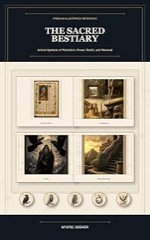
The Sacred Bestiary
Animal Symbols of Protection, Power, Death, and Renewal
Ravens, lions, owls, wolves, serpents, phoenixes, bees, horses, dragons, sphinxes, and griffins appear in portraits, plate studies, and visual maps. Their meanings emerge from particular stories, places, and cultures rather than a single universal dictionary.
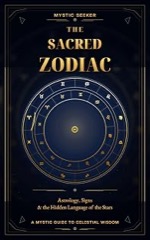
The Sacred Sky
A Complete Illustrated Guide to Western & Vedic Astrology
Explore tropical and sidereal systems through signs and rashis, planets and grahas, houses, aspects, and lunar nodes. The guide introduces chart interpretation, transits, relationships, nakshatras, dashas, and other Vedic techniques as material for reflection rather than fixed predictions.
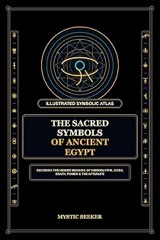
The Sacred Symbols of Ancient Egypt
Hieroglyphs, Gods, Death, Power & the Afterlife
From the ankh and Eye of Horus to the scarab, djed, lotus, and winged disk, this guide places familiar images within Egyptian religious and cultural contexts. Temples, tombs, and amulets open questions about maat, the ka and ba, judgment, and the afterlife.
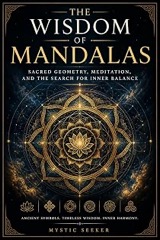
The Wisdom of Mandalas
Sacred Geometry, Meditation, and the Search for Inner Balance
Circles, centers, squares, triangles, and lotus forms provide a way into mandalas and yantras. The book considers Tibetan sand mandalas, rose windows, Jungian interpretation, and creative reflection while keeping their different cultural settings visible.