
The human problem
the Bhagavad Gita becomes clearer when its teaching is read through ordinary pressures: fear, duty, desire, grief, identity, control, and the search for freedom.
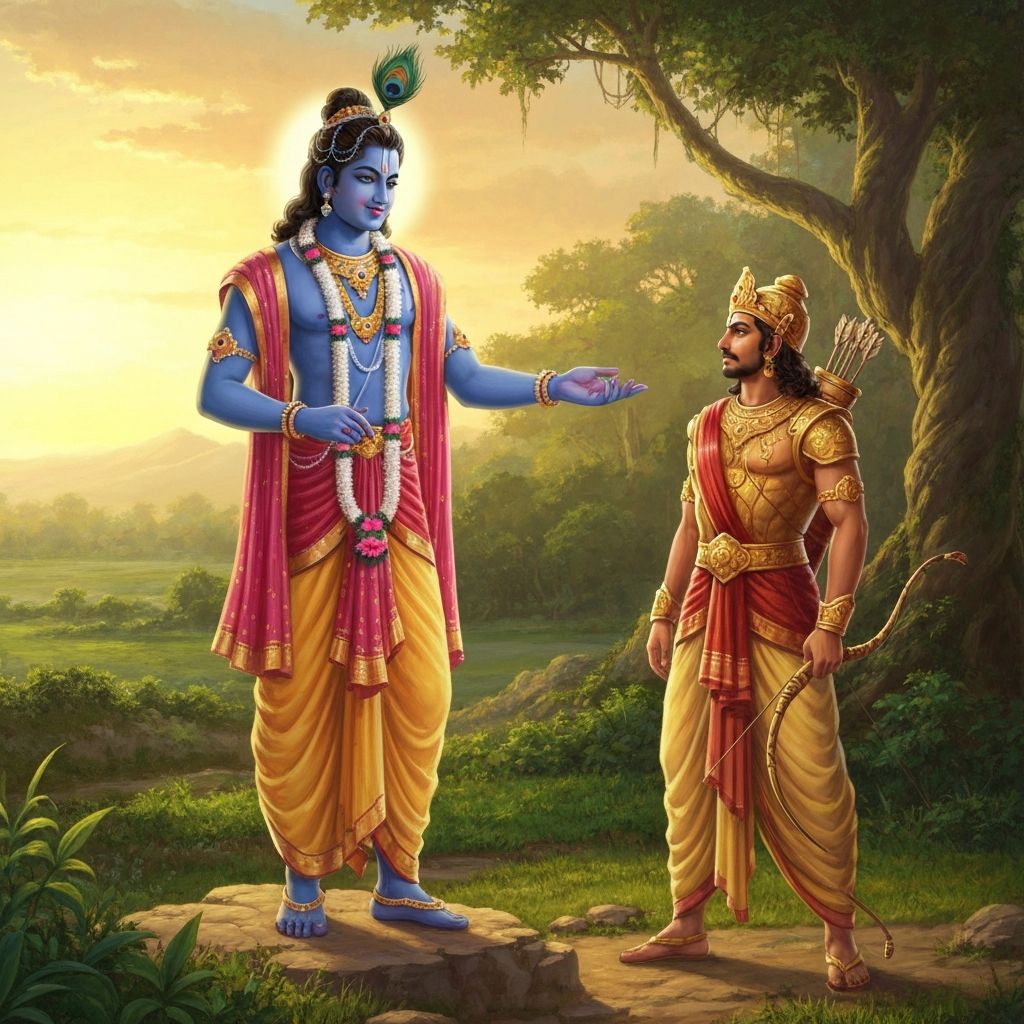
Text
Duty, action, devotion, and inner steadiness when life becomes morally complicated
What this hub is for
A practical Gita hub for readers who are not looking for vague inspiration, but a way to stand inside pressure without losing clarity, courage, or inner alignment.
What should I do when every available choice carries a cost?
How do I act without being consumed by the result?
What is the difference between duty, people-pleasing, and avoidance?
the Bhagavad Gita becomes clearer when its teaching is read through ordinary pressures: fear, duty, desire, grief, identity, control, and the search for freedom.
One sentence or image can carry more force than a rushed chapter. The point is not speed; it is where the teaching becomes practical.
This hub connects the text with the pressure of real decisions: known responsibilities, uncontrollable results, and the fear that makes action difficult.
Later readings usually become less about collecting answers and more about refining perception.
The Bhagavad Gita Reimagined
Instead of approaching the Gita as a remote scripture, this book treats it as a live conversation for moments of confusion, duty, fear, and inner conflict.
Open bookThe Many Gitas
Most readers know the Bhagavad Gita and never realize there is a wider library of Gitas. This book opens that larger world with structure, clarity, and context.
Open bookUnderstanding Hinduism
This book is written for readers who know fragments of Hinduism and want a structured, respectful, context-first guide to the tradition as a whole.
Open bookSir Edwin Arnold's public-domain poetic English rendering, useful as a freely accessible source-text doorway.
A native guide to the Gita's central human problem: what to do when duty, fear, love, and consequence collide.
Open readerA native orientation for reading sacred texts without reducing living religions to single quotes or slogans.
Open readerThe Ashtavakra Gita in Plain Words
This is a reading companion for one of the boldest nondual texts in the tradition: a book that does not flatter the self but asks what remains when mistaken identity fall...