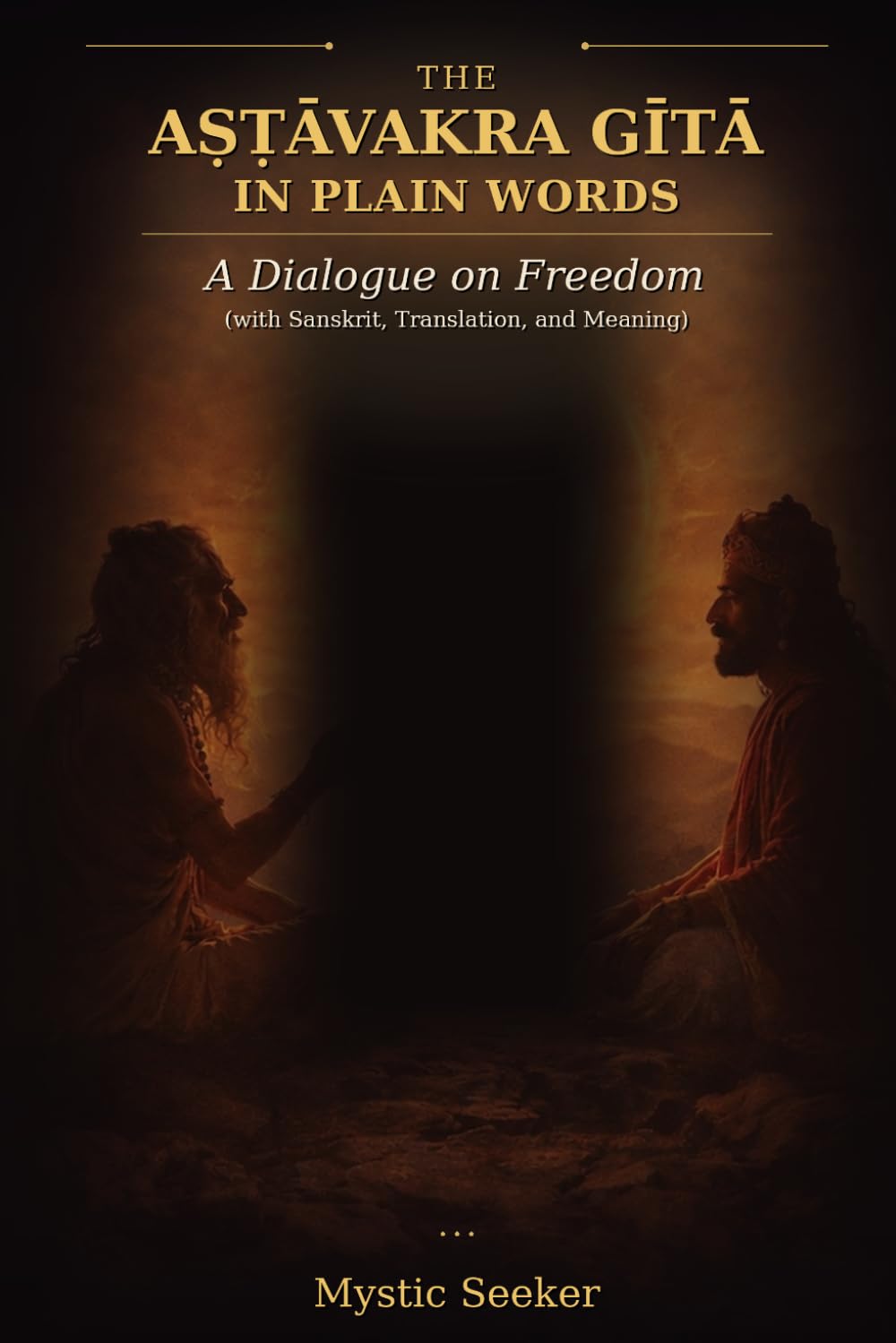
A guided listening home for Osho's Maha Geeta talks on the Ashtavakra Gita, organized for slow study, continuity, and reflection rather than passive consumption.
Audio remains hosted by Osho World. Mystic Seeker links and streams the publicly available MP3 files with attribution and a path back to the source page.
These lectures are in Hindi. English-speaking visitors should use the English Osho hubs below or pair this series with an English/plain-language Ashtavakra Gita study.
Press play here and the audio continues in the bottom player while you browse other pages.
0:00
Completed
0/91
Saved position
0:00
Source
Osho World
Playlist
Progress is remembered in this browser.
Listen in order or pick a random chapter. You can start from anywhere and still get hit hard with the direct facts.
How to use this hub
Study path and key questions.
Use these steps as a quick map, then move into the lectures, lessons, source texts, and related books below.
lecture seriesDeep diveListen here, study here
1
Begin with orientation
Use the opening talks to hear the tone of the text before trying to extract doctrine. The first task is to notice what the teaching is asking you to stop defending.
2
Listen in small clusters
Move through three to five talks at a time. After each cluster, write down one sentence that disturbed you, one that clarified you, and one that felt too easy to misunderstand.
3
Return to the original text
Pair the talks with a plain reading of the Ashtavakra Gita so the commentary remains tied to the source and does not become personality-driven.
4
Bring it into practice
Treat the teaching as a mirror during ordinary reactions: pride, hurt, fear, comparison, desire, and the need to be spiritually special.
Core questions
Use these as entry points.
4
What remains when identity, effort, and spiritual ambition fall away?
How does radical non-duality differ from moral improvement or belief?
What does it mean to witness the mind without becoming another controller inside it?
Living practice
This page does not replace Osho World or the source material. It adds a study wrapper: ordered listening, progress memory, reading connections, questions, and a way to connect the lectures with the broader Mystic Seeker library.
Hosted lessons
Read the Mystic Seeker guide inside this hub.
These are native lessons written for this site: short explanations, practices, prompts, and glossaries that make the hub useful without sending visitors away.
These notes turn the hub into a usable path: why it matters, how to approach it, and how to make the teaching practical without flattening it.
1
Why this deserves its own hub
The Ashtavakra Gita is unusually direct. It does not slowly build a devotional, ritual, or ethical system; it points sharply toward the witness and the unreality of the constructed self. A long lecture series can help, but only if the listener has a clean place to keep track, return, and study deliberately.
2
How to use the lectures
Listen as study, not as background audio. These talks are most useful when a listener pauses often, compares the teaching with lived reactions, and keeps the source text nearby.
Start with one lecture rather than trying to consume the whole series.
Keep a short note after each lecture: what was exposed, what was resisted, and what became simpler.
Return to the same lecture if it disturbed you. In direct teachings, resistance often marks the useful edge.
Do not confuse non-duality with passivity. The practical test is cleaner seeing, not withdrawal from life.
3
What Mystic Seeker adds
This page does not replace Osho World or the source material. It adds a study wrapper: ordered listening, progress memory, reading connections, questions, and a way to connect the lectures with the broader Mystic Seeker library.
Study materials
Curated sources for this hub.
Explore source texts and trusted references connected to this hub. Some readings open here; others continue to the original publisher.
This is a reading companion for one of the boldest nondual texts in the tradition: a book that does not flatter the self but asks what remains when mistaken identity falls away.
A Clear, Beginner-Friendly Guide to the Bhagavad Gita and the Other Great Gitas
Most readers know the Bhagavad Gita and never realize there is a wider library of Gitas. This book opens that larger world with structure, clarity, and context.
Instead of approaching the Gita as a remote scripture, this book treats it as a live conversation for moments of confusion, duty, fear, and inner conflict.
Alan Watts and the Art of Letting Go of Who You Think You Are
This book brings Alan Watts into plain, engaging language for readers who feel trapped inside self-image, overthinking, control, and the exhausting need to defend who they think they are.