Purpose
Help the reader distinguish awareness from passing experience.
Key takeaway
The witness is not another thought. It is the knowing in which thoughts, sensations, and identities appear.
1

Native lesson
A beginner-friendly way into self-inquiry.
Purpose
Help the reader distinguish awareness from passing experience.
Key takeaway
The witness is not another thought. It is the knowing in which thoughts, sensations, and identities appear.
Thoughts change, emotions change, body states change, roles change. Self-inquiry begins by noticing that change is known.
Vedanta is often misused to dismiss pain. Better inquiry includes pain honestly while asking what is aware of it.
Continue with Mystic Seeker
Use these books to continue the lesson into a deeper reading path.
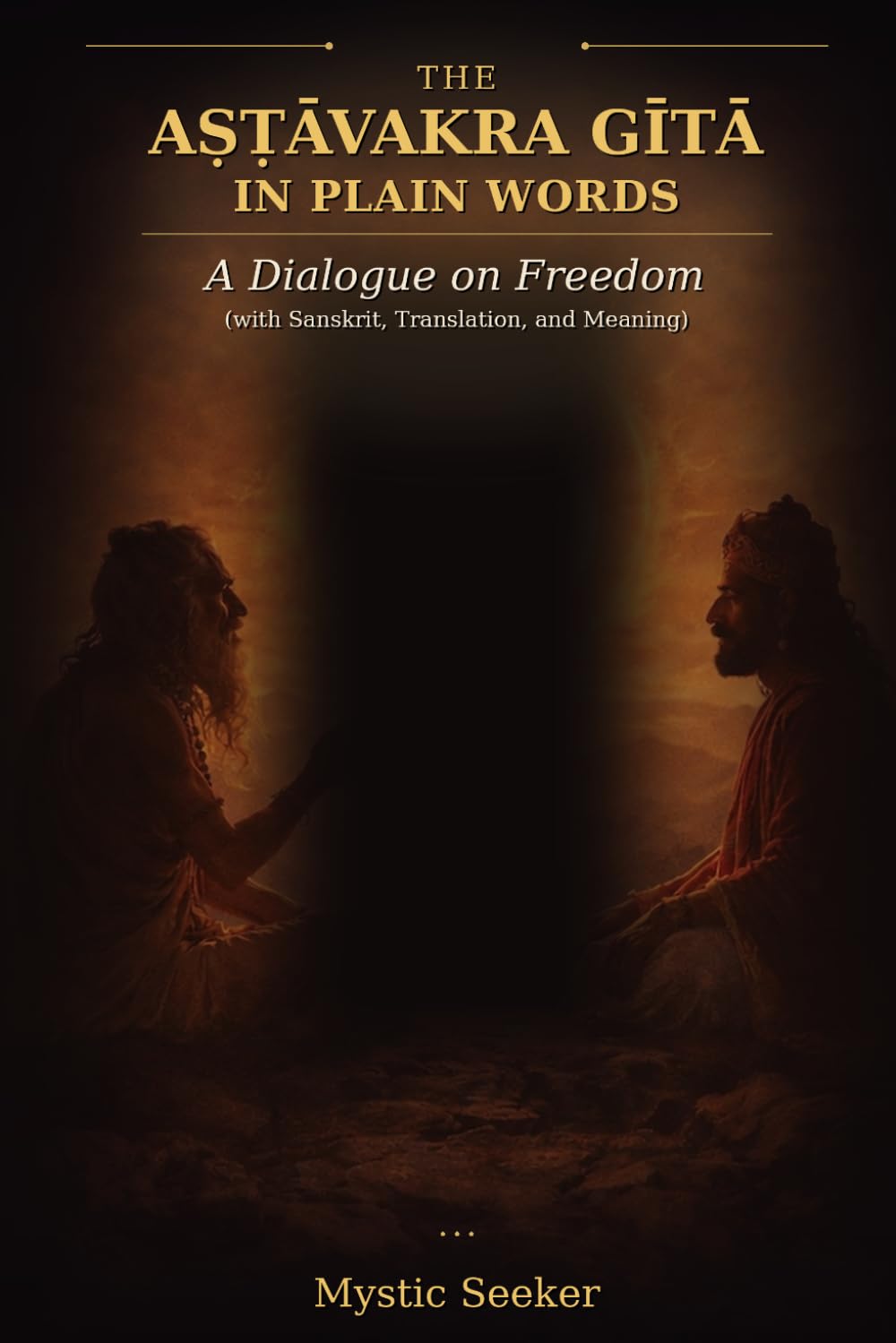
A Dialogue on Freedom
This is a reading companion for one of the boldest nondual texts in the tradition: a book that does not flatter the self but asks what remains when mistaken identity falls away.

Alan Watts and the Art of Letting Go of Who You Think You Are
This book brings Alan Watts into plain, engaging language for readers who feel trapped inside self-image, overthinking, control, and the exhausting need to defend who they think they are.

A Clear, Beginner-Friendly Guide to the Bhagavad Gita and the Other Great Gitas
Most readers know the Bhagavad Gita and never realize there is a wider library of Gitas. This book opens that larger world with structure, clarity, and context.
A Simple Guide to Hindu Thought, Texts, and Philosophy
This book is written for readers who know fragments of Hinduism and want a structured, respectful, context-first guide to the tradition as a whole.
Copyright © 2026 Mystic Seeker. All rights reserved.